

Explore Destinations
Exclusive Picks for the Curious Traveler
Nohkalikai
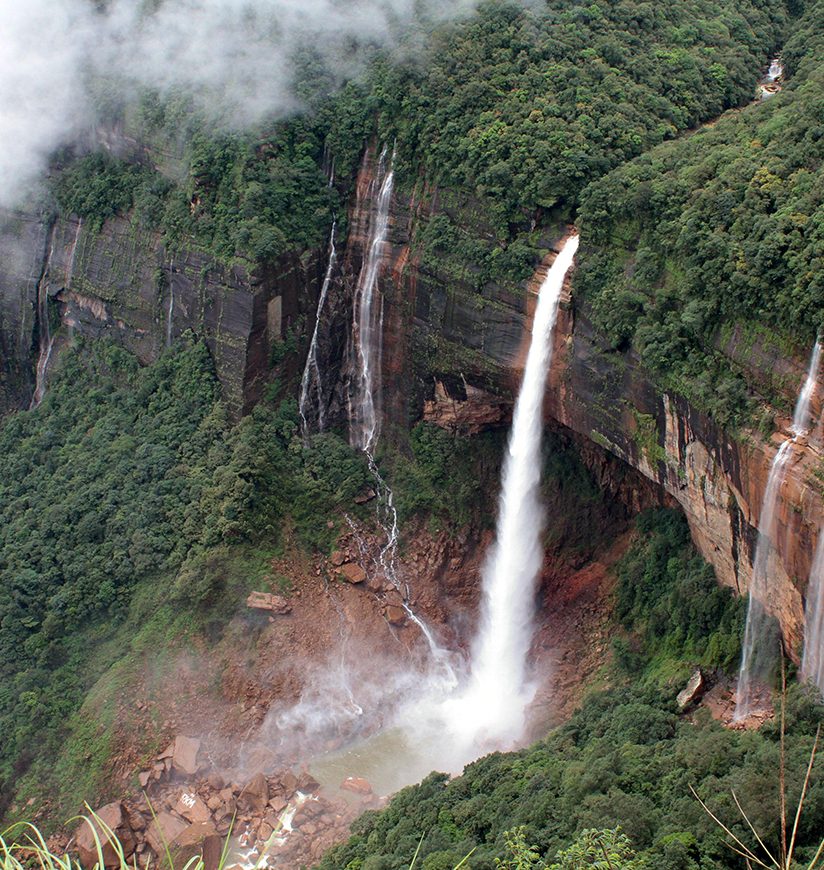
Nohkalikai Falls is one of India's tallest plunge and most breathtaking waterfalls, plunging 340 meters into a deep, emerald-green pool. Located near Cherrapunjee, one of the wettest places on Earth, this awe-inspiring natural wonder is fed by rainwater collected on a small plateau, making it a sight to behold throughout the year. The sheer force of the waterfall, combined with the surrounding misty cliffs and lush greenery, creates a mesmerizing spectacle that draws visitors from far and wide. Despite its beauty, Nohkalikai Falls carries a tragic legend, adding an air of mystery to its already captivating presence.
Learn More
Mawlynnong
Celebrated as Asia's cleanest village and fondly called “God's Own Garden”, Mawlynnong is surrounded by fruit orchards, swaying palms, and evergreen landscapes. The key highlights of the village is the iconic Nohwet Living Root Bridge- an extraordinary feat of indigenous engineering, made by weaving the roots of the Ficus elastica tree over generations. These bridges, unique to Khasi culture, grow stronger with time and symbolize nature's resilience. Visitors can also cool off in the refreshing waters beneath the bridge. Another attraction is the century-old Church of the Epiphany, showcasing charming European architecture amidst tropical greenery. Whether you seek nature, heritage, or quiet reflection, Mawlynnong promises an experience rooted in beauty, sustainability, and cultural richness.
Learn More
Mawkdok
Located about 30 km from Shillong, the viewpoint is also called the Duwan Sing Syiem Bridge viewpoint, offering dramatic vistas of a deep V-shaped gorge carpeted in verdant greenery. Mawkdok‑Dympep Valley beautifully blends scenic tranquility with adventure. From absorbing sweeping views and photographing the river-carved gorge to zooming across it via zipline or striking a pose in Khasi attire, it's a wonderful stop on the Shillong–Cherrapunji route..
Learn More
Elephant Fall
The Khasi name for Elephant Falls is Kshaid-Lai-Pateng, which roughly translates to the three levels over which the water plunges. The elephant-shaped rock was destroyed in an earthquake more than a hundred years ago, but the name lives on. The waterfall is the result of a mountain stream that drops over multiple levels, scything through the forested slope. The railed walkways begin at the head of the falls and continue to the bottom, ensuring that you not only see the magnificence of the falls from a close distance but also feel the spray of the cool water and the thunderous sound of the flow. The pool at the bottom of the falls is a tranquil spot where you can wade into the clear water at knee-level and get a nice picture with the giant cascade in the background.
Learn More
Sacred Groves (Mawphlang)
For centuries now, Khasi customs and traditions have been woven into the land and the forests. One of these forests still retains its significance today - the Sacred Groves of Mawphlang. Visitors are not allowed to take anything away from this hallowed forest, not even a pebble or a twig. The dark canopy above and soft humus under your feet will transport you to a primaeval age - a contrast from the green meadows and sprightly pines that dominate the surrounding hills.
Learn More
Krem-Puri-Cave
Krem Puri—meaning “fairy cave” in Khasi—is the world's longest sandstone cave, hidden deep in the forested hills near Mawsynram, Meghalaya. Spanning over 24 kilometers, this subterranean maze of narrow corridors, fossil-lined walls, and echoing chambers feels like a journey through time. Discovered in 2016, it's not just a geological marvel but a prehistoric archive, with fossils of marine reptiles like mosasaurs embedded in its sandstone. With its twisting passages and hushed mystery, Krem Puri is a dream for adventurers and a whisper from Earth's ancient past.
Learn More
Nohsngithiang (Seven Sisters Falls)
With a drop of more than 300 metres, Nohsngithiang is one of the most impressive waterfalls you will see anywhere in India. Like a majestic jewel draped over the limestone cliffs, it is segmented into seven parts which drop into the misty forested plains. Because of its unique segmented formation, the falls are also popularly referred to as the Seven Sisters Falls. During the monsoon months, the falls come alive with thundering force, each of the seven streams gracefully plunging down the verdant cliffs, veiled in shifting mist and golden sunlight. The cascading water glows at sunset, painting the cliff face in brilliant hues of orange and gold—a visual feast that lingers in the hearts of travelers. The segmented flow of the waterfall is said to represent the unity and diversity of the Seven Sister States of Northeast India—Arunachal Pradesh, Assam, Manipur, Meghalaya, Mizoram, Nagaland, and Tripura. In this way, the falls are not only a geographic wonder but also a cultural emblem, reminding visitors of the interconnected identity and heritage of the region.
Learn More
Nongriat
The descent to the Nongriat double-decker root bridge is an epic one. You begin at the tip of the valley close to the village of Tyrna and climb down approximately 3500 steps. On the way, there are plenty of stunning vistas and natural sights to soak in. The root bridges of Meghalaya are an enigma, an integral part of the old Khasi lifestyle that dates back to the times when trekking through thick forests and navigating fast-flowing rivers was a part of the routine. Nongriat's double-decker root bridge is unique because of its multi-level formation—it took years for these beautiful examples of botanical architecture to develop.
Learn More
Mawsmai Cave
Mawsmai Caves are a glimpse into the earth’s quiet, sculpted memory—where time drips from limestone ceilings and shadows dance across ancient stone. Beneath the surface of Meghalaya’s misty hills, this subterranean world twists and narrows, revealing chambers shaped by water and silence. It’s not just a cave—it’s a passage through geology, myth, and the slow artistry of nature.
Learn More
Arwah Cave
Arwah Cave is Meghalaya’s most famous cave and is easily accessible to regular visitors. It is renowned for its fossils, which can be observed in the lit-u[ interiors, especially towards the end of the cave. You will find crustacean shells and fish bones fossilised in the limestone walls of the cave. Apart from being a place for enthusiasts of natural history, the cave is also a maze of many turns and corners that would enthral every visitor. The underwater flow through these ancient cave formations for millennia. The walk to Arwah Cave is a very picturesque one – an enchanting path that has been aesthetically carved out of the thick vegetation. At one point, the pathway passes through the side of the Lawshynna Hill, giving you fantastic views of the waterfall and the surrounding valley. There is a seating area near the path where you can relax and enjoy sweeping views.
Learn More
Laitlum
Laitlum Canyon is one of Meghalaya's most spectacular viewpoints, offering breathtaking panoramas of deep valleys and rolling hills covered in lush greenery. Situated about 25 km from Shillong, this serene destination provides visitors with uninterrupted views, making it a haven for nature lovers and photographers alike. The dramatic cliffs and meadows create a striking contrast, while the peaceful surroundings make it an ideal escape from the bustling city.
Learn More
Shillong Peak
Experience the highest point in Meghalaya, standing at approximately 1,965 m (6,446-6,449 ft) above sea level. Shillong Peak offers stunning panoramic views of Shillong city, surrounding hills, distant waterfalls, and even the plains of Bangladesh. Culturally, the peak holds spiritual importance for the Khasi people. According to local mythology, the city of Shillong derives its name from the deity Lei Shyllong, with a small sacred shrine (U Shulong) at the summit where spring rituals are conducted by Mylliem's priest. Located about 10 km south of Shillong city, the peak features a viewpoint within an Indian Air Force radar station, meaning visitors must present valid photo ID and surrender cameras at the entry gate.
Learn More
David Scott Trail
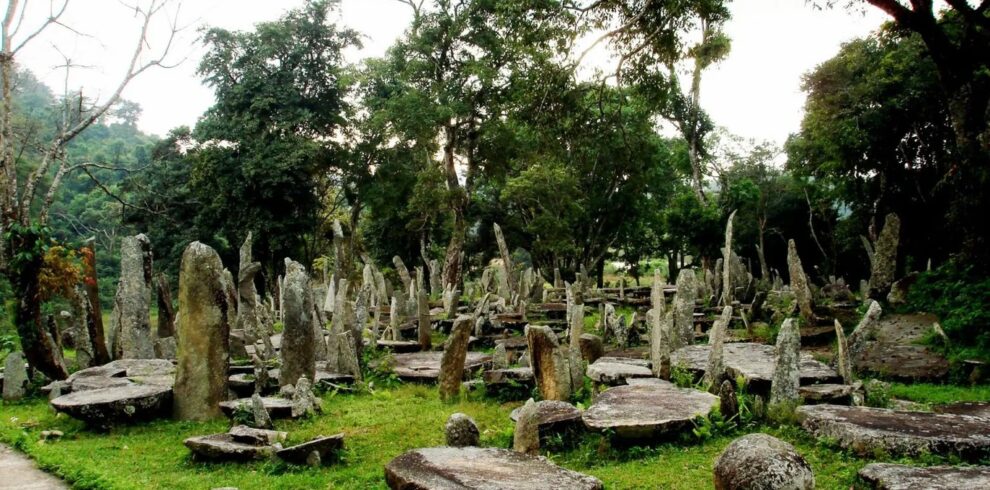
Once part of a colonial trade route, the David Scott Trail is now a trekker's delight—an old stone path that winds through rolling meadows, whispering pine groves, and moss-covered streams. Spanning around 16 km between Mawphlang and Lad Mawphlang, it blends history, nature, and local folklore in one scenic journey. Along the way, age-old bridges and ancient monoliths stand as quiet storytellers, making every step feel like a stroll through time.
Learn More
The Sacred Forest Trek
All across Meghalaya, local tribes have designated entire forests as sacred land, which not only keeps them safe but also gives the land a buffer against the blows of modernity. Take the Sacred Grove Trek and you’ll find out for yourself. This trek has been crafted in the Jaintia Hills, a lesser visited part of Meghalaya compared to the Garo or Khasi Hills. The prospect of having the trail all to yourself makes it even more appealing. The route provides a wide range of vistas for you to enjoy. Pine trees redolent with resin, wide trails untouched by human development, rivers meandering along blithely, and sacred forests growing thick under tribal protection, this trail packs so much in a single day of walking.
Learn More
Nongbareh
The Nongbareh living root bridge, which is located in the centre of the town, is recognised for its mesmerising beauty. This bridge has a double-span structure which bisects the Amayalee river and a road going to the river Umngot. This bridge is known for having a remarkable structure. It joins the banks of two rivers and provides an architectural elegance that is unique in its field. The bridge is an ancient one that is also said to be more than 100 years old. Another area below this settlement, known as Shmia Syntem, is another lovely sight that has attracted many tourists. It takes around an hour to descend to the riverbed and is located along the Umngot river pathways.
Learn More
Phe Phe Falls
Hidden deep in the green folds of the West Jaintia Hills, Phe Phe Falls is one of Meghalaya’s best-kept secrets. A two-tiered waterfall cascading into jewel-toned pools, it offers a dreamy setting for those seeking serenity off the beaten path. The approach—through bamboo groves, forested trails, and a bit of adventurous scrambling—makes the reward all the more breathtaking. It’s not just a destination but a quiet escape where nature does all the talking.
Learn More
Liat Prah Caves
Hidden deep in the mystical landscape of the East Jaintia Hills in Meghalaya lies Krem Lait Prah, a subterranean marvel and the longest natural cave in South Asia. Stretching over 34 km, this extraordinary cave is a dream destination for adventurers, geologists, and cave explorers alike.Krem Lait Prah is renowned for its enormous trunk passage, aptly nicknamed the 'Aircraft Hangar' — a colossal tunnel so vast it evokes the grandeur of man-made hangars, yet sculpted entirely by nature over millions of years.Inside, the cave system is a labyrinth of winding corridors, towering chambers, and surreal rock formations, carved through limestone by the persistent flow of underground rivers. It forms part of the vast network of caves in the Shnongrim Ridge area, many of which remain unexplored, adding an air of mystery and wonder.Krem Lait Prah isn’t just a geological wonder — it’s a gateway into Meghalaya’s underground world, offering a rare glimpse into one of the most unique and untouched environments on Earth..
Learn More
The Living Root Ladder Trek
Like most treks in Meghalaya, this one too starts with a car journey out of Shillong. Leave early in the morning so you can make it to Mawlyndun in time for the trek to your next destination: the home of the Living Root Nest. Once you reach Shiliang Jashar, named after the Jashar River that flows nearby, you can rest for the night. The forests around Shiliang Jashar are home to more marvels: not just the Living Root Ladder but also the Living Root Nest, both of which are wonderful examples of human innovation moulding natural creation for an enduring benefit. The Living Root Nest is a bower-like structure made by moulding the roots upward to form a circle. This creation is the perfect place to take a rest while feeding cocooned in safety.
Learn More
Krangshuri Falls
Unlike the dramatic waterfalls of Southern Meghalaya, Krangshuri has a more understated, peaceful charm. A calm river flows through dense forest before dropping suddenly, forming a wide curtain of water that spills over a rocky ledge. In summer, the pool below turns a striking shade of blue, its clarity revealing the stones beneath. Surrounded by thick greenery, Krangshuri is removed from the outside world, where the steady rush of water and the quiet rustling of leaves create a sense of deep tranquility.
Learn More
Kudengrim
The highway roads flanked by paddy fields and pine-crested hillocks give way to steep slopes as one descends into Kudengrim, a scenic village perched in the Jaintia Hills. The village offers quintessential Meghalayan sights and experiences, with knowledgeable and friendly residents always there to make your trip memorable and lively. Kudengrim’s first main attraction is a twenty-minute hike from the main village. Make your way through a tranquil forest and tread under a dense canopy before you reach a magnificent, wide-brimmed, segmented waterfall. Close to the cascade is Meghalaya’s famous living architecture– the Kudengrim Living Root Bridge. Admire the two-level bridge, created by weaving the roots of Ficus elastica trees, the giant guardians of the forests here.
Learn More